

Purina Sued For Natural Claims

The lawsuit claims Purina markets their pet foods as “Natural” when they contain synthetic ingredients.

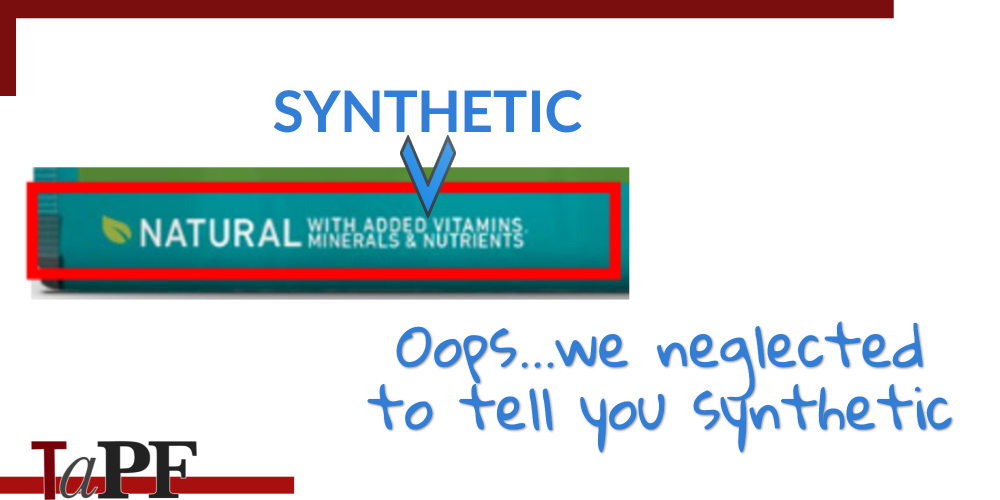
A lawsuit was recently filed against Purina Petcare Company in the state of New York. The lawsuit claims Purina markets its pet foods “in a systematically misleading manner that many of its products are natural” – when the pet foods actually contain “multiple synthetic ingredients.”
The lawsuit states: “Defendant clearly claims the Products are ‘natural’ on the Products’ label, capitalizing on the preference of health-conscious pet owners to purchase pet food that is free from synthetic ingredients.” The court documents provide this example:

The lawsuit continues: “However, Defendant’s Products contain multiple synthetic ingredients.” Examples of synthetic ingredients provided were “zinc sulfate, copper sulfate, calcium pantothenate (or D-calcium pantothenate), thiamine mononitrate, l-lysine hydrochloride, pyridoxine hydrochloride, and menadione sodium bisulfite complex.”
“As a result of its deceptive conduct, Defendant violates state consumer protection statutes and has been unjustly enriched at the expense of consumers.”
“Defendant’s labeling and advertising puts forth a straightforward, material message: the Products contain only ingredients that are natural. Reasonable consumers would understand Defendant’s labeling to mean that the Products contain only natural ingredients, and not any synthetic substances.”
“Because the labeling claim uses the word ‘and’ rather than ‘but,’ and does not specify that the added vitamins, minerals and/or nutrients are synthetic, a reasonable consumer would expect that the ‘added vitamins, minerals and nutrients’ are natural as well.”
Do you agree? Does Purina’s label claim – “Natural Cat Food with added vitamins, minerals & nutrients” transparently tell consumers this pet food contains un-natural (synthetic) ingredients? Or is the statement misleading?
For more information on this lawsuit pet owners can contact the law firm listed on the court documents:
BURSOR & FISHER, P.A.
Joshua D. Arisohn
Julian C. Diamond
1330 Avenue of the Americas, 32nd Fl.
New York, NY 10019
Telephone: (646) 837-7150
Wishing you and your pet(s) the best,
Susan Thixton
Pet Food Safety Advocate
Author Buyer Beware, Co-Author Dinner PAWsible
TruthaboutPetFood.com
Association for Truth in Pet Food

Become a member of our pet food consumer Association. Association for Truth in Pet Food is a a stakeholder organization representing the voice of pet food consumers at AAFCO and with FDA. Your membership helps representatives attend meetings and voice consumer concerns with regulatory authorities. Click Here to learn more.
What’s in Your Pet’s Food?
Is your dog or cat eating risk ingredients? Chinese imports? Petsumer Report tells the ‘rest of the story’ on over 5,000 cat foods, dog foods, and pet treats. 30 Day Satisfaction Guarantee. Click Here to preview Petsumer Report. www.PetsumerReport.com
Find Healthy Pet Foods in Your Area Click Here

The 2023 List
Susan’s List of trusted pet foods. Click Here to learn more.

The 2023 Treat List
Susan’s List of trusted pet treat manufacturers. Click Here to learn more.
Learn More
Angel Fund Grant Helps Puff Get Second Intussusception Surgery

When Kyle Costa took his dog to Mar Vista Animal Hospital last May, he was told something he had heard before: Puff, a mixed-breed female who is not yet a year old, was diagnosed with intussusception, a dangerous inflammation of the intestines that is more common in younger animals.
Puff had had surgery for the condition earlier this year. Kyle and his wife Pamela had put together enough money to pay for the first surgery but that was going to be difficult this time.
Dr. Wendy Brooks suggested to Kyle that he could apply for an Angel Fund grant to help pay the costs. The hospital assisted him with the application and he received $500 in assistance, an amount matched by the hospital.
That was a huge help, Kyle said. “Angel Fund definitely got us where we needed to be,” he said. “I didn’t want to let my dog go and, when I had no other options, Angel Fund really helped me out. I’m very glad my dog didn’t have to die.”
He added that the staff at the Mar Vista clinic took great care “to make sure we were included in this [Angel Fund] program.”
He and Pamela rescued Puff last April when she was about two months old. Intussusception can cause blockages and can have other severe complications. It was a relief for both of them when Dr. Brooks’ surgery was successfully completed.
Puff is doing very well now, Kyle said. “She’s really healthy and is full of energy.”
Kyle, Pamela and Puff live in Rancho Park not far from Mar Vista Animal Hospital.
TFP Nutrition Initiates Voluntary Recall Of 50 Lb. Bags Of Retriever Dry Dog Food

Company Announcement
FOR IMMEDIATE RELEASE – October 21, 2023
TFP Nutrition of Nacogdoches, TX announced today that it is issuing a voluntary recall of Retriever All Life Stages Mini Chunk Chicken Recipe Dry Dog Food due to potential Salmonella contamination. Salmonella can affect animals eating the products and there is risk to humans from handling contaminated products, especially if they have not thoroughly washed their hands after having contact with the products or any surfaces exposed to these products.
Healthy people infected with Salmonella should monitor themselves for some or all of the following symptoms: nausea, vomiting, diarrhea or bloody diarrhea, abdominal cramping and fever. Rarely, Salmonella can result in more serious ailments, including arterial infections, endocarditis, arthritis, muscle pain, eye irritation, and urinary tract symptoms. Consumers exhibiting these signs after having contact with this product should contact their healthcare providers.
Dogs with Salmonella infections may be lethargic and have diarrhea or bloody diarrhea, fever, and vomiting. Some pets will have only decreased appetite, fever, and abdominal pain. Infected but otherwise healthy pets can be carriers and infect other animals or humans. If your pet has consumed the recalled product and has these symptoms, please contact your veterinarian.
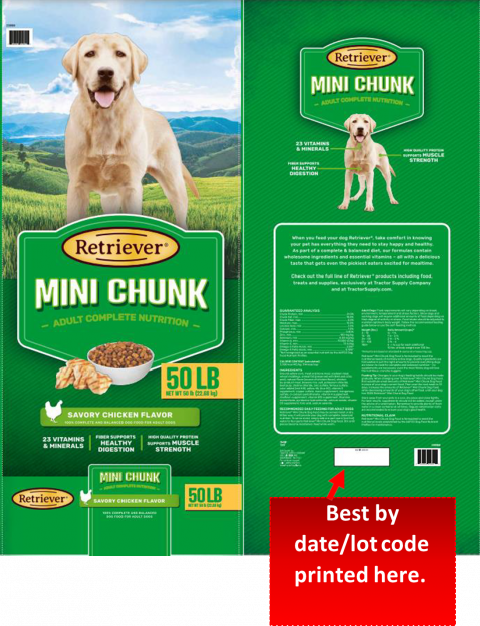
The product was manufactured on October 4, 2023 and October 5, 2023 at the Nacogdoches, Texas facility. Affected product was distributed in Arkansas, Arizona, California, Louisiana, Mississippi, New Mexico, Nevada, Oklahoma, Texas and Utah and contains “3277 TFP” or “3278 TFP” on the second line of the date code.
| Description | Size | Production Codes |
|---|---|---|
| Retriever All Life Stages Mini Chunk Chicken Recipe Dry Dog Food | 50lb. | BEST BY 10 2024 3277 TFP |
| BEST BY 10 2024 3278 TFP |
No dog or human illness has been reported to date with respect to the recalled dog food. All recalled product has been removed from store shelves and no other Tractor Supply Company products are affected by the voluntary recall.
This voluntary recall is being issued due to a single sample of Retriever All Life Stages Mini Chunk Chicken Recipe Dry Dog Food that tested positive for Salmonella in a random sample test conducted by the Office of the Texas State Chemist.
Consumers who are unsure if the product they purchased is included in the recall, or would like a replacement product or refund, may contact TFP Nutrition via a toll-free call at 1-800-330-3048, Monday through Sunday, 8 am – 5 pm CST. Consumers may also go to tfpnutrition.com/recallExternal Link Disclaimer for more information.
Company Contact Information
Consumers:TFP Nutrition 800-330-3048Media: 800-330-3048
Product Photos
Plants safe for dogs and cats
Learn about pet-friendly plants and flowers to help brighten up your home, yard, and garden with these beautiful blooms.
Written by Shannon Perry & Alex Hunt
— Medically reviewed by Dr. Erica Irish
Updated October 13, 2023 From: Betterpet.com at https://betterpet.com/plants-safe-for-dogs/

Table of Contents
- Safe plants for dogs and cats
- Precautions about pets and plants
- Unsafe plants for dogs
- If your dog ingests a potentially deadly plant
- Plant poison prevention
- Frequently asked questions
The essentials
- Many common plants are toxic to pets — Most will only have mild effects if ingested, but a few, including daylilies and sago palms, can result in death.
- You can have a green thumb AND be a pet parent — The list of non-toxic plants safe for dogs and cats is long, too! Keep our lists — and the ASPCA’s database — handy when shopping at the nursery.
- Obsessive plant eating is cause for concern — Call your veterinarian if you notice your dog is eating grass more frequently than normal or has signs of stomach discomfort.
Pets love to sniff — and sometimes taste — what’s around them. The good news is that having dogs and cats doesn’t mean giving up a beautiful home and garden. If it’s time to spruce up your house or apartment, garden, balcony, or raised beds, this list of pet-safe plants, shrubs, and garden greenery will add pops of color and freshness while keeping your furry friends safe.
When shopping at the nursery or if you use a landscaper for your garden, make sure to mention the fact that you have pets. Most garden centers will make recommendations and help you find different varieties of pet-safe greenery and flowers for your home and yard.
Ultimate list of plants that are safe for dogs and cats
While the ASPCA warns that any ingested plant material may cause gastrointestinal upset for dogs or cats, it considers the below plants to be non-toxic. These are also among the most popular indoor plants, as defined by home-improvement giant Home Depot and #PlantTok and #plantfluencer life.
african violet
areca palm
boston fern (sword fern)
bottlebrush
camellia
canna lilies
cast iron plant
chinese money plant
crepe myrtle
echeveria
forsythia
fuchsias
common lilac
magnolia bushes
nasturtium (indian cress)
nerve plant
oregano
parlor palms
peperomia
petunias
polka dot plant
ponytail palm
rosemary (anthos)
snapdragons
spider plant
star jasmine
sunflower
sweetheart hoya
thyme
viburnum
wax plants (hoyas)
white ginger
Looking for more pet-safe plant options? Here are some other, non-toxic houseplants you can try. When in doubt, it’s always a good idea to search the ASPCA database to find the right plant for you and your pets to enjoy safely. WATCH VIDEO
Precautions about pets and plants
While all of the parts of the plants above are regarded as non-toxic if accidentally ingested, individual pets might have specific allergies or sensitivities, so it’s important to observe any changes in your pet’s behavior or health when introducing new plants to your household. Additionally, be cautious of fertilizers and plant food, as they can absolutely be harmful to pets if ingested.
Indoor and outdoor plants that are unsafe for dogs
While there are many pet-friendly plants for green thumbs, the list of poisonous plants is long. Consequences of ingesting one range from mildly irritating symptoms to potential fatality. The list includes trendy plants like Chinese evergreen , sansevieria (also known as mother-in-law’s tongue or snake plant ), golden pothos (also known as devils ivy ), and common yard plants such as azaleas, hydrangeas, and hostas.
Here’s a list of some of the most common plants in and outside your home that pose a risk to your pup:
Most toxic plants for dogs
| Plant | Description |
|---|---|
| Aloe vera | While a useful houseplant, it may induce vomiting, diarrhea, and tremors in dogs and cats. |
| Azaleas and rhododendrons | This family of plants is commonly used in landscaping, but the entire genus of these large flowering shrubs is considered poisonous for dogs. Toxins affect the intestines, cardiovascular, and central nervous system. Eating this shrub can result in vomiting, diarrhea, weakness, and heart problems. |
| Boxwood | Boxwood is often found in wreaths or arches, or as greenery, but ingestion can lead to dehydration, drooling, digestive problems, vomiting, and diarrhea. |
| Chrysanthemum | Though chrysanthemums, nicknamed mums, won’t kill your pet, this plant is a natural insecticide that may result in vomiting, drooling, diarrhea, rashes, and a loss of coordination. |
| Daffodil and jonquil | Daffodils contain tyrosine, a chemical that triggers vomiting. Eating a daffodil can lead to cardiac issues, convulsions, vomiting, diarrhea, heart arrhythmia, and low blood pressure. |
| Dahlia | Dahlias are toxic, though the reason why is unknown. Ingestion can lead to mild gastrointestinal problems and mild dermatitis. |
| Daisy | Daisies are part of the chrysanthemum species so they are also toxic. Ingestion can lead to vomiting, diarrhea, drooling, incoordination, and dermatitis. |
| Foxglove | All parts of the plant are extremely poisonous. Foxgloves contain naturally occurring toxic cardiac glycosides that affect the heart. Ingestion can lead to cardiac arrest and death. |
| Holly | All holly varieties including the popular Christmas holly, Japanese holly, English holly, and American holly, are toxic. Eating holly leaves can result in vomiting, diarrhea, lip smacking, drooling, and gastrointestinal injury. |
| Hosta | Popular because they thrive even with indirect light, hostas can cause stomach upset. |
| Hydrangea | Hydrangeas are poisonous to people and pets in large quantities as there are toxic substances in both the leaves and flowers. Eating this plant can lead to diarrhea, lethargy, vomiting, and more. |
| Iris | These spring blooms add a pop of yellow or blue to your garden, but they add a level of danger for your dog. Eating irises can result in mild to moderate vomiting, skin irritation, drooling, lethargy, and diarrhea. |
| Lantana | This popular, quick-growing ground cover adds a pop of bright yellow, pink, orange, purple, or red to your yard, but in rare cases can cause liver failure in cats and dogs. |
| Lilies | Many lilies, including daylilies and peace lilies, are toxic to dogs and cats. While dogs may experience gastrointestinal upset, the risk is greatest for cats — they’re at risk of acute kidney injury or even death. |
| Peony | This early spring blooming shrub has pink, red, or white flowers, but peonies contain a toxin called paenol that can lead to vomiting, excessive drooling, and diarrhea. |
| Sago palm | All parts of sago palms are poisonous. They contain cycasin, a toxin that causes severe liver damage in dogs. The Pet Poison Hotline reports that severe liver damage can be seen within two to three days of ingestion and the survival rate is 50%. |
| Tulip | The bulbs are the most toxic part of this plant, but every part of these popular spring flowers can hurt your dog. Ingestion can lead to convulsions, cardiac problems, difficulty breathing, gastrointestinal discomfort, and drooling. |
| Wisteria | While beautiful, all parts of wisteria are poisonous — but especially the seeds. The seeds contain both lectin and wisterin glycoside and while ingesting one may not be fatal, as few as five seeds can be fatal to dogs and cats, and even cause illness in children. |
| Yew | All varieties of the yew, a common evergreen, contain toxins that are poisonous to dogs. Every part of the plant is dangerous, as they have taxines, a bitter poison in the leaves and seeds. When ingested by your pooch, it can lead to vomiting, difficulty breathing, seizures, dilated pupils, coma, and even death. |
What to do if your dog has ingested a potentially deadly plant, shrub, or flower
If you think your furry friend has ingested a poisonous plant, call your veterinarian as soon as possible. Delaying a phone call in a potential emergency can cause injury or even death. If you catch your pup munching on one of our aforementioned toxic plants, keep an eye out for symptoms of poisoning.
Dog owners may also call the ASPCA Pet Poison Control Hotline 24 hours at (888) 426-4435 or the Poison Pet Helpline at 855-764-7661 if they suspect plant poisoning.
👉 Check out our comprehensive list of all the foods that are unsafe for your dog to eat, plus pet-safe human foods.
Symptoms of plant poisoning in pets
Symptoms can vary as they are specific to each type of plant eaten. These are the most common symptoms you can watch out for:
- Vomiting
- Diarrhea
- Drooling
- Seizures
- Difficulty breathing
Plant poison prevention
The best cure for poisoning is prevention. Take note of any plants and shrubs in your yard or your house and identify any plants that may be dangerous. Then either remove these plants and shrubs or restrict your dog’s access to them. We’ve also rounded up a list of pet-safe pesticides and pest-control options for your yard and home.
Choosing pet-friendly plants can ensure the well-being of your furry friends while allowing you to enjoy the benefits and beauty of indoor and outdoor flora. Whether it’s the purifying Bamboo Palm or the colorful Snapdragons, incorporating non-toxic plants creates a harmonious environment for everyone in the household. Always research before purchasing a new plant, and monitor your pets for any adverse reactions, ensuring a safe and happy coexistence between pets and plants.
Frequently asked questions
What plants are OK to have around pets?
While many plants might not be an option, you can still have beautiful, colorful plants like snapdragons, marigolds, jasmine, and thyme in your yard and garden.
What is toxic in the garden for dogs?
When it comes to plants in your vegetable garden, there are some plants that you should keep your pup away from. Onions, tomatoes, chives, and garlic can all pose a risk to your dog. Consider fencing these sections in or ensure your dog is supervised at all times. It’s also important to keep dogs away from your compost pile. As foods are broken down, they may become toxic to dogs if ingested — particularly with dairy products and various pieces of bread and grains.
How can I identify toxic plants to keep away from my pets?
Along with this article, there are plenty of great online resources to check which plants you should keep away from your furry friends. You can also consult your local nursery or plant store to see which plants they recommend keeping away from pets. Overall, it’s best to do as much research as you can before introducing a new plant to your home or garden.
What are the early warning signs of plant poisoning in pets?
Symptoms tend to vary by plant, but often the first universal signs are vomiting, upset stomach, diarrhea, excessive salivation, lethargy, skin irritation, and loss of appetite. If your pet is experiencing any of these, contact your vet immediately.
Are there any houseplants that can improve indoor air quality for both humans and pets?
Yes! Plenty of the houseplants listed above provide air-purifying benefits, specifically: Spider plants, Boston ferns, areca palms, and cast iron plants.
© 2023 Betterpet – Advice from veterinarians and actual pet experts
American College of Veterinary Behaviorists Issues Statement on Adversive Training Methods

Done with Dog Daddy
By Coco Lederhouse October 16, 2023
Outfitted in a flashy Gucci tracksuit and sunglasses, and often seen walking beside his German Shepherds, Augusto DeOliveira, also known as “The Dog Daddy,” certainly commands attention.
Augusto DeOliveira “The Dog Daddy”, has gone viral on social media for his ability to control dogs. However, numerous behavioral science organizations, including the American College of Veterinary Behaviorists (ACVB), are warning owners that aversive training methods can be dangerous.
His dog training practices have caught the attention of concerned animal welfare groups, trainers, veterinary behaviorists, and pet owners. On September 13, the American College of Veterinary Behaviorists (ACVB) issued a statement expressing serious concerns regarding DeOliveira’s training practices and warning of the damaging effects that his methods could have on dogs.
“The training methods we see in the videos are using physical force or correction,” said Dr. Kelly Ballantyne, president of the ACVB and medical director at Insight Animal Behavior Services in Chicago. “We know that those methods are a big threat to animal welfare, they have a high risk of causing or increasing fear, panic, and aggression. They also put the handler and any of those people nearby at high risk for a bite.”
Instead, Dr. Ballantyne advocates for teaching animals through the reinforcement of desired behaviors and managing their environment to prevent undesired behaviors.
While aversive techniques may appear to stop a “bad” behavior, she explained that the effectiveness of the intervention isn’t determined by what happens in the moment, but if the behavior is changed over time. The American Veterinary Society of Animal Behavior issued a position statement in 2021 on humane dog training that advises against aversive training methods.
Video clips on social media are just a snapshot in time, and it’s “pretty easy to get swayed by the quick fix,” Dr. Ballantyne said.
Zak George, an evidence-based dog trainer and educational content creator, has been a strong opponent of DeOliveira’s training approach. George has organized peaceful protests at DeOliveira’s appearances around the U.S. and worked to raise awareness among pet owners.
“Our collective aim is to illuminate the dangers and inefficacies of inhumane training techniques,” George said. These techniques create an atmosphere of mistrust between dogs and their owners, and are associated with increased behavioral issues and aggression, he explained.
Several other organizations, including the Animal Behaviour and Training Council and the Royal Society for the Prevention of Cruelty to Animals raised concerns about DeOliveira’s group training sessions in London earlier this summer.
Similarly, the Association of Professional Dog Trainers and the Pet Professional Guild Australia issued a statement in response to DeOliveira’s training techniques.
Both George and Dr. Ballantyne warned of trainers who use outdated language like “dominance” or “alpha.” Dominance theory, based on the perceived dynamics of a wolfpack, has been debunked even in wolves, Dr. Ballantyne explained. Using those terms to explain a dog’s actions is not supported by current scientific consensus on dog behavior.
“The issue we’re confronting in the dog training community isn’t confined to any one individual like Augusto DeOliveira,” George said. “His practices, unfortunately, aren’t outliers; they’re part of a troubling pattern prevalent among a significant number of trainers employing antiquated and harmful methods.”
In the current “buyer beware” environment, accountability is a challenge, George said. Many owners aren’t equipped to identify harmful practices, he added, “[They are] often misled by trainers who have mastered the art of pseudoscientific rhetoric. That’s why it’s imperative to rely on trainers who employ evidence-based, force-free methods—endorsed universally by reputable behavioral science organizations.”
Veterinarians play a key role in helping to guide clients towards trainers who use appropriate methods and are knowledgeable about dog behavior. The American College of Veterinary Behaviorists has information about choosing a dog trainer, U.S. dog training organizations with certification options, and a list of animal behavior profession.
© 2023 American Veterinary Medical Association All rights reserved
View this email in your browser What to REALLY Know About Chocolate Toxicity for Your PetThe Halloween season can be a great time to enrich your pet with walks and playtime in the falling leaves, bonding with your pet with the increased indoor time, and more. What to REALLY Know About Chocolate Toxicity for Your PetThe Halloween season can be a great time to enrich your pet with walks and playtime in the falling leaves, bonding with your pet with the increased indoor time, and more. At the same time it can be spooky for more reasons than that horror movie your partner is always trying to get you to watch! Pet owners often misunderstand the real dangers that chocolate can pose to their pet. Here are the REAL things you need to know: White chocolate poses no danger (think of a Zero bar). Milk chocolate (Hershey’s), which most Halloween candy consists of, poses a very minor risk. Dark chocolate (baker’s chocolate for example) poses a modest risk. For milk chocolate, a pet has to consume about 3 ounces of milk chocolate per 10 pounds of body weight before even a veterinarian would notice any troubling signs such as excitement (comes from theobromine in chocolate which acts like caffeine). It takes a massive amount of chocolate to be fatal. So to round out with an example, an average 20-pound dog would have to consume two full-sized candy bars (think Snicker’s bars) to even show any clinical signs. A 70-pound Labrador Retriever would have to consume 14 Butterfingers. If your dog eats a piece of chocolate, don’t worry about it, and certainly save yourself a trip to the emergency vet! The worst thing that will happen to your dog is probably digestive upset. However, if your dog is a non-stop eating machine and somehow got into a treasure trove of treats, please seek your veterinarian for treatment. I hope you all have a wonderful Halloween season and I’ll see you in November! Wags, Dr. Marty Becker Want more from Dr. Becker? Read more…Join his Facebook Group! |